

Column Q&A: Can Research Based on Public Databases Be Published in International Journals?
Can Research Based on Public Databases Be Published in International Journals?


With the rapid development of big data and artificial intelligence, public databases are being used more and more widely in medical and health research. From genomics and epidemiology to drug development, public databases provide massive amounts of high-quality data, saving researchers a great deal of time and cost.
However, many students and researchers in medical and health-related fields still have doubts about the academic value of public databases:
Can studies based on public databases be published in international academic journals?
Can they be used as the main research content for undergraduate, master’s, or doctoral theses?
This article focuses on these questions and discusses their feasibility and strategies, using real-world examples—especially the NHANES database.
Question I:What Are Public Databases? How Are They Used?
1)How Can Clinicians Efficiently Publish Papers Using Public Databases?
In a fast-paced clinical environment, doctors often face limited time and limited research resources. Daily clinical work is already overwhelming, leaving little room for laboratory experiments or long-term data collection. Systematically organizing clinical data is also a major challenge.
Yet, many clinicians still manage to publish SCI papers successfully. One of their key strategies is making full use of public databases.
Public databases have become a crucial resource in medical research. They offer large-scale, high-quality, and well-standardized data. Researchers can focus directly on data mining, statistical analysis, and innovative modeling, rather than data collection itself.
For many clinicians, using public databases has become an effective path for:
graduation requirements,
professional title promotion, and
annual performance evaluations.
What Is a Public Database?
A public database refers to a data platform collected, organized, and openly shared by government agencies, research institutions, or academic organizations. These databases contain reliable data covering multiple levels, such as:
genomics,
proteomics,
metabolomics,
clinical cases,
epidemiological surveys, and
health statistics.
For clinicians, clinical and epidemiological databases are often the most valuable, because the data collection and cleaning have already been completed. Researchers can directly conduct:
statistical analyses,
disease risk modeling,
outcome prediction, and
treatment effectiveness evaluation.
Below are high-quality public databases commonly used in clinical research, and they have already been widely used in SCI publications.
(1) Epidemiology and Health Survey Databases
These databases provide large-scale population health data and are suitable for epidemiology, health assessment, and disease risk factor analysis.
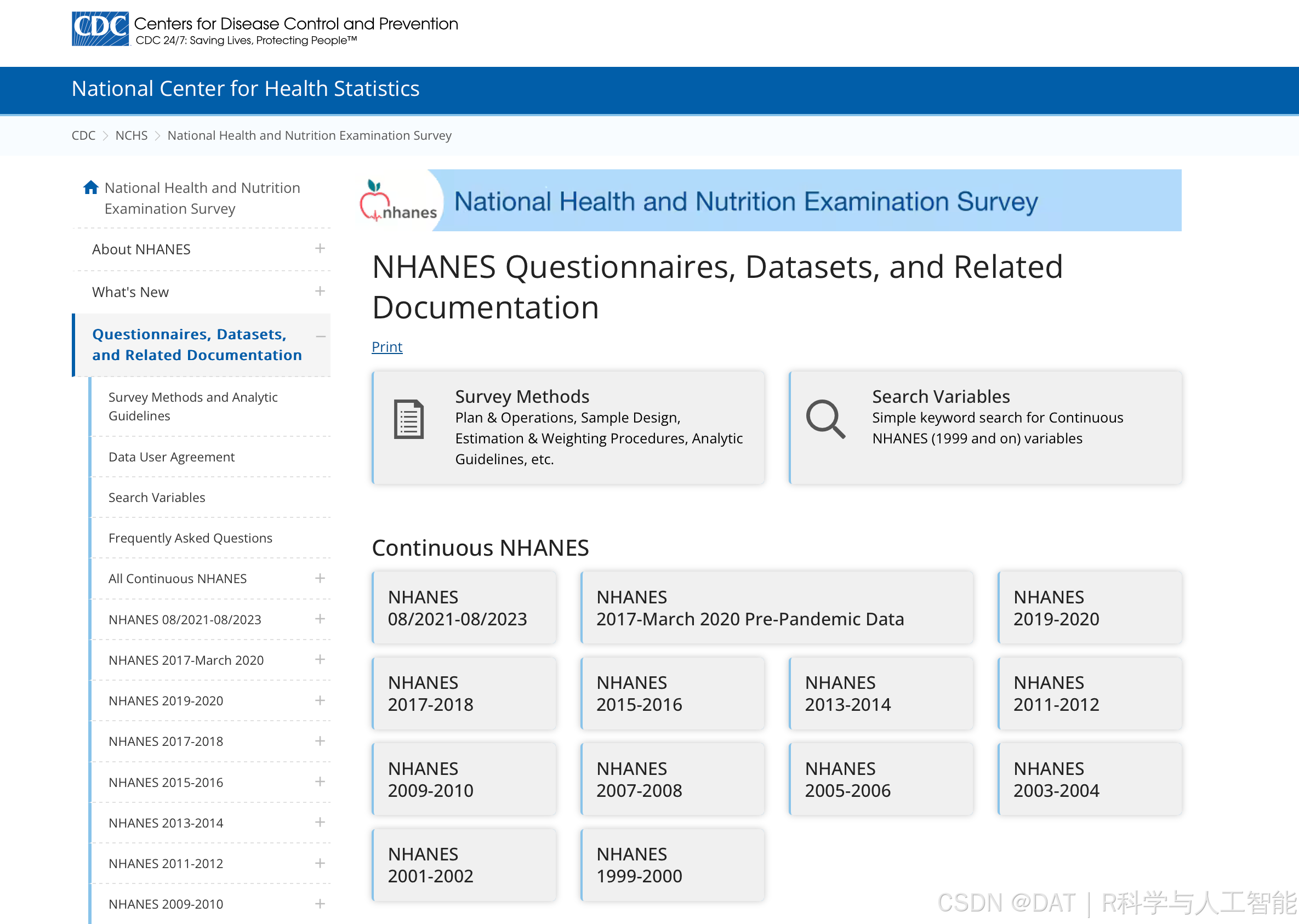
NHANES (National Health and Nutrition Examination Survey)
Established by the U.S. CDC
Provides nationwide health and nutrition survey data, including demographics, diet, physical exams, and laboratory tests
Widely used in studies on cardiovascular disease, diabetes, obesity, and nutrition
Official website: NHANES Database
CHNS (China Health and Nutrition Survey)
Covers health, nutrition, and socioeconomic information in China
Suitable for health policy, nutrition research, and chronic disease epidemiology
Official website: CHNS Database
CHARLS (China Health and Retirement Longitudinal Study)
Focuses on aging and chronic disease management
Suitable for geriatric diseases and studies on socioeconomic factors affecting health
Official website: CHARLS Database
(2) Cancer and Oncology Databases
These databases include cancer registry data, treatment strategies, and survival outcomes.
SEER (Surveillance, Epidemiology, and End Results)
Established by the U.S. National Cancer Institute
Covers cancer cases since 1973
Used for incidence, mortality, survival analysis, and treatment evaluation
Official website: SEER Database
NCDB (National Cancer Database)
Certified by the American College of Surgeons
Includes data from over 1,500 hospitals
Suitable for treatment comparison and long-term survival analysis
Official website: NCDB Database
(3) Mortality and Disease Burden Databases
These databases record mortality and causes of death worldwide.
NDI (National Death Index)
Records deaths in the U.S. population
Can be linked with NHANES
Suitable for long-term cohort and mortality risk studies
Official website: NDI Database
